-
0 Comments

AI-Powered Robotaxis Expand Across Europe: How Autonomous Taxis Are Transforming Transportation in 2026
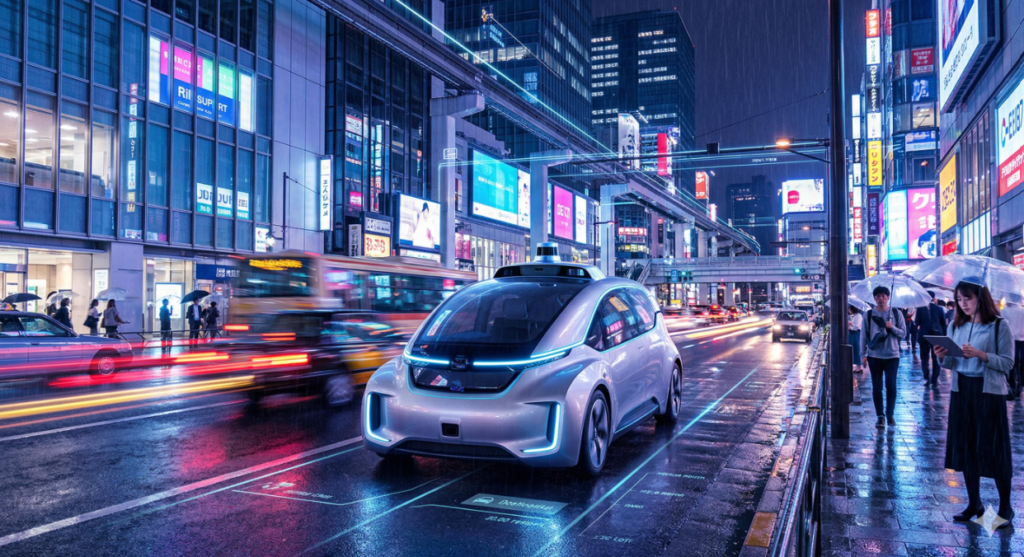
AI-Powered Robotaxis Expand in Europe: The Beginning of a New Mobility Era
Introduction
The future of transportation has long been associated with self-driving vehicles, intelligent mobility systems, and cities where commuting is safer, faster, and more efficient. While autonomous driving technology has been under development for more than a decade, 2026 is increasingly being viewed as a turning point. One of the strongest indicators of this transformation is the rapid expansion of AI-powered robotaxi services across Europe.
Recent announcements from autonomous driving companies and ride-hailing platforms indicate that thousands of AI-driven robotaxis are expected to operate across multiple European cities in the coming years. What was once considered a futuristic concept is now becoming a commercial reality. These autonomous vehicles promise to reshape urban transportation, reduce operational costs, improve road safety, and create new economic opportunities.
As Europe embraces AI-powered mobility, governments, technology companies, automakers, and consumers are entering a new phase of transportation innovation. The deployment of robotaxis is not merely about replacing human drivers; it represents a fundamental shift in how cities move people and goods.
What Are AI-Powered Robotaxis?
A robotaxi is a fully autonomous vehicle capable of transporting passengers without a human driver. Unlike traditional taxis or ride-sharing vehicles, robotaxis rely on advanced artificial intelligence systems, machine learning algorithms, sensors, cameras, radar, GPS, and high-definition mapping technologies to navigate roads safely.
The core intelligence of a robotaxi continuously processes millions of data points every second. The vehicle observes traffic signals, detects pedestrians, predicts the behavior of nearby vehicles, and makes driving decisions in real time.
Modern robotaxis typically use a combination of:
Artificial Intelligence (AI)
Machine Learning (ML)
Computer Vision
LiDAR Systems
Radar Sensors
High-Precision GPS
Edge Computing
Cloud-Based Data Processing
Together, these technologies enable autonomous vehicles to operate with minimal or no human intervention.
Why Europe Is Becoming a Key Robotaxi Market
Europe has emerged as one of the most attractive regions for autonomous mobility deployment. Several factors contribute to this trend.
Strong Regulatory Framework
European governments have historically maintained strict transportation and safety standards. While regulation can sometimes slow innovation, it also creates a structured pathway for autonomous vehicle deployment.
Countries such as Germany, France, the United Kingdom, and the Netherlands have introduced regulatory frameworks that allow autonomous vehicle testing and commercial operations under specific conditions.
These regulations provide clarity for investors and technology companies, encouraging large-scale deployments.
Smart City Initiatives
Many European cities have invested heavily in smart infrastructure over the past decade. Intelligent traffic systems, connected road networks, digital mapping, and advanced communication technologies create ideal conditions for autonomous transportation.
Cities such as Berlin, Paris, Amsterdam, Barcelona, and Copenhagen are increasingly integrating AI-driven transportation solutions into their urban planning strategies.
Sustainability Goals
Europe’s commitment to reducing carbon emissions aligns closely with the robotaxi industry. Most autonomous taxi fleets are electric vehicles, contributing to lower emissions and cleaner urban environments.
The combination of electric mobility and AI-powered transportation supports Europe’s long-term climate goals.
The Technology Behind Robotaxis
The success of robotaxis depends on remarkable advances in artificial intelligence.
Computer Vision
Computer vision enables autonomous vehicles to “see” their surroundings. Cameras mounted around the vehicle capture continuous visual information, which AI systems analyze in real time.
The system can identify:
Traffic lights
Road signs
Pedestrians
Cyclists
Vehicles
Construction zones
Lane markings
This capability allows the vehicle to navigate safely even in complex urban environments.
Machine Learning
Machine learning models continuously improve driving performance by learning from millions of miles of driving data.
Every trip contributes to improving:
Route optimization
Hazard detection
Traffic prediction
Passenger safety
Fuel and energy efficiency
As data volumes grow, robotaxis become increasingly reliable and intelligent.
Sensor Fusion
Robotaxis combine information from multiple sensors to create a highly accurate understanding of the environment.
Sensor fusion integrates:
Cameras
Radar
LiDAR
GPS
Ultrasonic sensors
This layered approach increases reliability and helps maintain safe operation under varying weather and traffic conditions.
Benefits of Robotaxis for European Cities
Improved Road Safety
Human error remains one of the leading causes of road accidents globally.
Common causes include:
Distracted driving
Fatigue
Speeding
Drunk driving
Poor judgment
AI-powered robotaxis do not experience fatigue or distraction. Their decision-making systems continuously monitor the environment and react faster than human drivers in many situations.
As autonomous technology matures, accident rates may decline significantly.
Reduced Traffic Congestion
Autonomous vehicles can communicate with traffic management systems and optimize routes in real time.
Benefits include:
Reduced idle time
Faster route selection
Smoother traffic flow
Better utilization of road infrastructure
This could help major European cities address chronic congestion problems.
Lower Transportation Costs
Without human drivers, operating costs may decline substantially.
Potential savings include:
Labor expenses
Fuel optimization
Reduced accident costs
Predictive maintenance
Over time, these efficiencies could make transportation more affordable for consumers.
Increased Accessibility
Robotaxis can improve mobility for:
Elderly individuals
People with disabilities
Non-drivers
Rural populations
Autonomous transportation may provide greater independence and accessibility across society.
Economic Impact of Robotaxi Expansion
The robotaxi industry is expected to create substantial economic value.
New Business Models
Traditional car ownership could gradually shift toward Mobility-as-a-Service (MaaS).
Instead of owning a vehicle, consumers may increasingly rely on:
Subscription transportation services
On-demand autonomous rides
Shared mobility platforms
This shift could redefine the automotive industry.
Growth Opportunities
The autonomous mobility ecosystem supports multiple sectors:
Artificial Intelligence
Semiconductor Manufacturing
Cloud Computing
Telecommunications
Electric Vehicle Production
Cybersecurity
Data Analytics
Companies operating in these areas may benefit from growing robotaxi adoption.
Job Creation
Although autonomous vehicles may reduce demand for some driving roles, they are also creating opportunities in:
AI engineering
Robotics
Data science
Fleet management
Infrastructure development
Cybersecurity
The net economic impact will depend on how effectively labor markets adapt to technological change.
Challenges Facing Robotaxi Deployment
Despite significant progress, several challenges remain.
Public Trust
Many consumers remain cautious about riding in fully autonomous vehicles.
Building trust requires:
Demonstrated safety records
Transparent testing
Regulatory oversight
Positive passenger experiences
Public acceptance will be critical for widespread adoption.
Cybersecurity Risks
Connected vehicles are potential targets for cyberattacks.
Robotaxi operators must invest heavily in:
Data protection
Secure communications
Threat detection systems
Continuous software updates
Cybersecurity will remain a top priority.
Weather Conditions
Autonomous vehicles often perform best in predictable environments.
Challenges include:
Heavy rain
Snow
Fog
Road construction
Unusual traffic patterns
AI systems continue to improve, but handling all conditions remains a technical challenge.
Regulatory Complexity
Europe consists of multiple jurisdictions with varying transportation rules.
Harmonizing regulations across countries will be important for large-scale deployment.
Competition in the Global Robotaxi Race
Europe is not alone in pursuing autonomous transportation.
Major players include:
United States
Companies such as Waymo, Tesla, and other autonomous driving firms continue expanding operations and testing advanced technologies.
China
China has become one of the most aggressive markets for autonomous mobility.
Significant investments are flowing into:
Smart infrastructure
AI development
Autonomous fleets
Electric vehicles
Europe
Europe’s strengths include:
Strong regulations
Advanced automotive manufacturing
Smart city initiatives
Sustainability leadership
The region has the potential to become a global leader in safe and responsible autonomous transportation.
The Future of Urban Mobility
The expansion of robotaxis represents only the beginning of a broader mobility transformation.
Future developments may include:
Autonomous Delivery Vehicles
Self-driving systems could revolutionize logistics and last-mile delivery.
Integrated Smart Transportation
AI could coordinate:
Public transit
Robotaxis
Bike-sharing
Autonomous shuttles
Creating a seamless transportation ecosystem.
Reduced Car Ownership
As autonomous mobility becomes more convenient and affordable, fewer individuals may choose to own private vehicles.
AI-Powered Cities
Robotaxis are likely to become a key component of future smart cities, where transportation systems continuously optimize themselves using real-time data and artificial intelligence.
Conclusion
The expansion of AI-powered robotaxis across Europe marks a significant milestone in the evolution of transportation. Advances in artificial intelligence, machine learning, electric mobility, and smart infrastructure are converging to create a future where autonomous vehicles play a central role in everyday life.
While challenges related to regulation, cybersecurity, weather conditions, and public trust remain, the momentum behind autonomous mobility continues to grow. Governments, technology companies, automakers, and investors increasingly view robotaxis as a key pillar of future transportation networks.
The coming decade will likely determine how quickly autonomous mobility transitions from pilot projects to mainstream adoption. If current trends continue, robotaxis could transform European cities by making transportation safer, cleaner, more accessible, and more efficient than ever before.
The era of AI-powered transportation is no longer a distant vision—it has already begun.