EU AI Act 2026: Europe’s New AI Transparency Rules Have Arrived

Artificial Intelligence has transformed the way people work, search, create content, shop online, and communicate. From AI-powered customer support to realistic image generators and video creators, AI has become deeply embedded in everyday life.

Now, Europe has taken a historic step toward regulating this rapidly evolving technology.

As of 2 August 2026, key transparency obligations under the European Union AI Act officially apply. The new rules require organizations to clearly disclose when people are interacting with AI and, in many cases, when content has been generated or manipulated using artificial intelligence. The goal is to reduce deception, improve public trust, and establish accountability in the AI ecosystem.

For businesses, creators, developers, and technology companies worldwide, this marks one of the most significant regulatory milestones since the introduction of GDPR.

But what exactly has changed? Who is affected? And why does this matter even if your business operates outside Europe?

Let’s break it down.


What Changed on August 2, 2026?

The AI Act is a broad legislative framework, but the provisions taking effect now focus on transparency.

Under Article 50, users should be able to recognize when they are interacting with AI or consuming AI-generated content in situations where confusion or deception could occur. These obligations apply to providers and deployers of relevant AI systems, with some transitional arrangements for systems already on the market before the effective date.

Some of the major requirements include:

  • Users must be informed when interacting with AI systems such as chatbots.
  • Certain AI-generated or AI-manipulated images, videos, and audio require labeling.
  • Deepfakes generally require clear disclosure.
  • Some AI-generated content relating to matters of public interest may require transparency notices.
  • Providers are expected to support machine-readable marking to help identify AI-generated content where required.

These measures are designed to help citizens distinguish authentic human-created content from synthetic media.


Why Is Europe Introducing These Rules?

Over the past two years, generative AI has advanced at an extraordinary pace.

Today’s AI systems can generate:

  • Photorealistic images
  • Human-like voices
  • Entire videos
  • News articles
  • Computer code
  • Marketing campaigns
  • Business reports

While these capabilities offer tremendous benefits, they also create opportunities for misinformation, fraud, impersonation, and manipulation.

Deepfakes have become increasingly sophisticated, making it difficult for ordinary users to distinguish genuine content from synthetic media.

European policymakers argue that transparency—not prohibition—is the first step toward responsible AI adoption. Rather than banning most AI applications, the AI Act seeks to ensure that people know when AI is involved so they can make informed judgments.


What Is the EU Trying to Achieve?

The AI Act pursues several objectives:

1. Build Public Trust

People should know when they’re communicating with an AI system instead of a human.

For example:

  • Customer support chatbots
  • Virtual assistants
  • AI booking systems
  • AI-generated emails
  • Voice AI agents

Greater transparency can reduce confusion and improve user confidence.


2. Combat Deepfakes

AI-generated videos and voices have become convincing enough to imitate public figures, business leaders, and ordinary individuals.

The new rules aim to make synthetic content easier to identify through disclosures and technical marking where applicable.


3. Reduce AI-Driven Fraud

Cybercriminals increasingly use AI to create:

  • Fake customer support
  • Voice cloning scams
  • AI phishing campaigns
  • Identity fraud
  • Investment scams

While transparency rules alone cannot eliminate these threats, regulators view them as part of a broader strategy to improve accountability and user awareness.


Which Companies Will Be Affected?

The impact extends well beyond European startups.

Global AI companies offering products or services in the EU may need to comply with relevant provisions, including organizations developing or deploying generative AI systems. This includes major firms such as OpenAI, Google, Microsoft, Meta, Anthropic, Adobe, and many others, depending on how their systems are used and whether they fall within the scope of the rules.

This means compliance is increasingly becoming a global business consideration rather than only a European issue.


What About AI Content Creators?

This is one of the biggest questions creators are asking.

If you publish AI-generated content that reaches European audiences, you should understand when disclosures may be required under the AI Act.

Examples include:

  • AI-generated videos
  • AI voiceovers
  • Deepfake content
  • AI-generated news content in certain contexts
  • AI-created advertisements

Importantly, the rules are nuanced. Not every AI-assisted image, meme, or personal creative work automatically requires a visible label. The legal requirements depend on the type of content, context, audience, and whether the activity falls within the scope of the regulation.


Why This Matters Beyond Europe

Some may assume these rules affect only EU businesses.

History suggests otherwise.

When GDPR came into force, many global companies adopted similar privacy standards worldwide rather than maintaining different systems for different regions.

The AI Act could have a comparable effect. Businesses operating internationally may choose to implement consistent AI transparency practices across all markets to simplify compliance and build user trust. While the exact global impact remains to be seen, many observers expect the EU’s approach to influence future AI regulation elsewhere.


AI Regulation Is Entering a New Era

The timing of these rules is notable.

Recent AI safety incidents—including reported cybersecurity tests involving advanced AI systems—have intensified discussions between European regulators and leading AI companies about governance, safeguards, and oversight. These developments have reinforced the importance of transparency and accountability as AI capabilities continue to advance.

For businesses, the message is clear:

AI is no longer just a technological opportunity—it is becoming a regulated technology that requires governance, documentation, and responsible deployment.

How Will the EU AI Act Affect Businesses?

The biggest misconception about the EU AI Act is that it only concerns large technology companies.

In reality, businesses of all sizes may be affected if they develop, deploy, or use AI systems that fall within the scope of the regulation and offer products or services in the European Union.

This includes:

  • SaaS companies
  • E-commerce businesses
  • Banks and financial institutions
  • Healthcare providers
  • Marketing agencies
  • HR technology platforms
  • Customer service providers
  • AI startups
  • Software development firms

Even companies headquartered outside Europe may need to comply if they serve EU users or make AI-enabled products available in the EU. The AI Act has an extraterritorial reach similar in concept to the GDPR, though the specific obligations depend on the AI system and its use.


What Should Businesses Do Now?

Waiting until regulators begin enforcement is a risky strategy.

Organizations should start preparing by reviewing where AI is already being used across their operations.

A practical roadmap includes:

1. Identify Every AI System

Many companies already use AI without realizing how broadly it has spread.

Examples include:

  • Chatbots
  • AI-powered customer support
  • Marketing automation
  • AI coding assistants
  • Recruitment software
  • Meeting transcription tools
  • Image generation platforms
  • Document summarization tools

The first step is creating an inventory of these systems.


2. Understand Your Risk Profile

The AI Act uses a risk-based approach.

Some AI applications carry minimal regulatory obligations, while others face much stricter requirements.

Examples of higher-risk areas include:

  • Recruitment
  • Credit scoring
  • Education
  • Critical infrastructure
  • Medical diagnosis
  • Law enforcement
  • Biometric identification

Organizations should evaluate whether any of their AI systems fall into higher-risk categories.


3. Create an AI Governance Framework

Forward-looking organizations are establishing internal AI governance programs.

Typical elements include:

  • AI usage policies
  • Human oversight procedures
  • Model approval processes
  • Vendor due diligence
  • Risk assessments
  • Employee training
  • Incident reporting
  • Compliance monitoring

Strong governance is becoming a competitive advantage rather than just a compliance exercise.


What Does This Mean for Content Creators?

If you’re a YouTuber, blogger, marketer, designer, or social media creator, the AI Act is a reminder that transparency matters.

Many creators now rely on tools such as:

  • ChatGPT
  • Claude
  • Gemini
  • Midjourney
  • Adobe Firefly
  • Runway
  • Kling AI
  • Veo

Using AI isn’t prohibited. The key question is whether the content falls into situations where disclosure is legally required under the AI Act.

For example, creators producing realistic synthetic media or deepfakes should understand the applicable transparency obligations before publishing content in the EU.


The Marketing Industry Is Entering a New Phase

AI has transformed digital marketing.

Today marketers use AI to:

  • Write blog posts
  • Generate advertisements
  • Produce videos
  • Design graphics
  • Create product descriptions
  • Personalize email campaigns

While AI can dramatically improve productivity, businesses should maintain human review and ensure any required disclosures are provided.

Consumers increasingly value authenticity. Organizations that are open about their responsible use of AI may strengthen trust with customers rather than weaken it.


Why AI Governance Is Becoming a Boardroom Priority

Until recently, AI discussions were mostly confined to technology teams.

That is changing.

Boards of directors and executive leadership teams are now asking questions such as:

  • What AI tools are employees using?
  • Are customer interactions transparent?
  • Could AI create legal or reputational risks?
  • Are third-party AI vendors compliant?
  • Do we have an AI governance policy?

AI is becoming an enterprise risk management issue, alongside cybersecurity, privacy, operational resilience, and regulatory compliance.


How the EU AI Act Could Shape Global AI Regulation

The EU is often one of the first major jurisdictions to introduce comprehensive digital regulations.

Similar patterns were seen with:

  • GDPR
  • Digital Markets Act (DMA)
  • Digital Services Act (DSA)

Many experts believe the AI Act may become an international reference point for future AI governance.

Countries including the United Kingdom, Canada, Japan, Australia, Singapore, and India are all developing or refining their own AI governance approaches, though their legal frameworks differ significantly.

Rather than copying the EU model exactly, governments are likely to adapt elements that suit their own legal systems and policy goals.


Challenges Businesses May Face

Compliance will not be effortless.

Organizations may encounter challenges such as:

  • Updating legacy AI systems
  • Training employees
  • Revising contracts with AI vendors
  • Maintaining documentation
  • Meeting transparency requirements
  • Managing compliance across multiple jurisdictions

Smaller businesses and startups may find these obligations more resource-intensive than larger enterprises with dedicated legal and compliance teams.


Opportunities Hidden Inside Regulation

Regulation is often viewed as a burden.

However, history suggests that companies that adapt early often gain a competitive advantage.

Organizations that invest in:

  • Responsible AI
  • Transparent AI practices
  • Ethical governance
  • Human oversight
  • Strong documentation

may build greater customer confidence and reduce regulatory risk.

In a crowded AI marketplace, trust can become a differentiator.

AI Safety Enters a New Era: Why Rogue AI Agents Are Changing Enterprise Security Forever

Artificial intelligence has moved far beyond answering questions or generating images. The latest generation of AI systems can browse the internet, write software, analyse business documents, schedule tasks, interact with applications, and make decisions with minimal human intervention. These systems, commonly known as AI agents, are rapidly becoming an integral part of modern businesses.

For years, conversations about artificial intelligence focused primarily on what AI could achieve. Today, a different question is taking centre stage:

How do we ensure AI systems remain secure, trustworthy, and under human control as they become increasingly autonomous?

Recent developments have brought this discussion into sharp focus. Researchers, governments, technology companies, and cybersecurity experts are paying unprecedented attention to AI safety after reports highlighted the unexpected behaviour of advanced AI agents operating in realistic environments. These events have accelerated discussions around governance, monitoring, emergency shutdown mechanisms, and enterprise safeguards.

Rather than signalling that artificial intelligence is becoming inherently dangerous, these developments demonstrate something equally important: AI is becoming powerful enough that safety must evolve alongside capability.

This marks the beginning of a new chapter in enterprise technology.


AI Has Entered Its Agent Era

The first wave of generative AI transformed how people create content. Large language models helped users draft emails, summarise reports, write code, translate languages, and answer complex questions within seconds.

The next phase is fundamentally different.

Instead of simply responding to prompts, AI agents perform tasks.

A modern AI agent can:

  • Research information across multiple websites

  • Compare documents and identify inconsistencies

  • Draft contracts or presentations

  • Analyse thousands of financial records

  • Schedule meetings

  • Monitor business workflows

  • Execute repetitive operational tasks

  • Collaborate with other AI systems

In many organisations, these agents are already acting as digital co-workers.

Unlike traditional automation software, AI agents continuously interpret information, adapt to changing situations, and determine the next best action based on context. This flexibility makes them significantly more valuable—but also introduces new categories of operational risk.


Why AI Agents Require Different Security Thinking

Traditional software follows fixed instructions.

AI agents do not.

Every decision they make depends on context, data, objectives, permissions, and interactions with other systems. This flexibility creates remarkable opportunities, but it also expands the range of possible outcomes.

Security professionals often describe this as an increase in the “decision surface.”

Instead of protecting only data and applications, organisations must now protect autonomous decision-making.

Consider a hypothetical enterprise AI agent responsible for reviewing supplier invoices.

Most of the time, it performs flawlessly. It verifies purchase orders, checks payment history, flags duplicates, and prepares recommendations for finance teams.

Now imagine that the same agent encounters manipulated documents designed specifically to confuse its reasoning process.

Without proper safeguards, it could:

  • Approve incorrect transactions

  • Reveal confidential information

  • Execute unauthorised workflows

  • Interact with malicious websites

  • Produce misleading recommendations

This does not necessarily indicate malicious intent. Rather, it illustrates how complex systems can behave unpredictably when faced with unexpected inputs.

Managing these scenarios is rapidly becoming one of the most important priorities in enterprise AI adoption.


The Growing Conversation Around Rogue AI

The phrase “rogue AI” often appears in science fiction, where machines suddenly become hostile to humanity.

Reality is far less dramatic—but no less significant.

In today’s context, a rogue AI agent generally refers to a system whose behaviour deviates from its intended objectives due to errors, manipulation, conflicting instructions, or unforeseen interactions.

Examples include:

  • An AI assistant performing actions outside its authorised scope

  • Automated software making poor decisions after receiving misleading inputs

  • AI agents interacting with external services in unintended ways

  • Autonomous systems continuing tasks despite changing circumstances

These situations are typically engineering and governance challenges rather than signs of artificial intelligence becoming self-aware.

The distinction matters because it shapes how organisations respond.

Instead of fearing AI itself, enterprises are investing in stronger oversight, monitoring, testing, and accountability.


Why Enterprises Are Paying Attention

Enterprise adoption of AI has accelerated dramatically over the past two years.

Banks are deploying AI for fraud detection.

Manufacturers use AI to optimise production planning.

Healthcare providers rely on AI-assisted diagnostics.

Retailers forecast customer demand with machine learning.

Telecommunications companies automate network operations using intelligent systems.

As AI becomes embedded in mission-critical operations, even small errors can have significant consequences.

A recommendation engine making a poor product suggestion may be inconvenient.

An AI agent approving financial transactions incorrectly, modifying cloud infrastructure, or accessing sensitive customer information represents an entirely different level of risk.

This shift explains why executive leadership—including boards of directors—is now treating AI governance as a strategic business priority rather than a purely technical issue.


AI Security Is Becoming a Boardroom Discussion

Until recently, cybersecurity teams primarily focused on defending networks, endpoints, cloud environments, and user identities.

Today, AI introduces another layer of governance.

Senior executives are asking new questions:

  • Which AI models are being used across the organisation?

  • What data can AI systems access?

  • Who approves autonomous workflows?

  • How are AI decisions monitored?

  • Can AI-generated actions be audited?

  • What happens if an AI agent behaves unexpectedly?

  • Is there an emergency shutdown capability?

These questions extend beyond technology.

They involve legal compliance, operational resilience, ethics, reputation, and customer trust.

As a result, AI governance is increasingly becoming a cross-functional responsibility shared by technology leaders, risk managers, legal teams, compliance officers, and executive leadership.


The Rise of AI Governance Frameworks

Organisations are responding by developing formal governance frameworks that define how artificial intelligence should be designed, deployed, monitored, and continuously improved.

A comprehensive AI governance programme typically includes:

Human Oversight

Critical decisions remain subject to human approval.

Permission Controls

AI agents receive only the minimum level of system access required for their assigned tasks.

Continuous Monitoring

Activities are logged, analysed, and reviewed for unusual behaviour.

Independent Testing

AI systems undergo red-team exercises designed to expose weaknesses before deployment.

Incident Response

Clear procedures define how organisations respond if AI systems behave unexpectedly.

Transparency

Important AI-generated decisions can be explained, reviewed, and audited.

Together, these practices reduce operational risk while allowing organisations to benefit from AI-driven productivity.


Why Cybersecurity and AI Are Becoming One Conversation

Historically, cybersecurity focused on protecting systems from external attackers.

Artificial intelligence introduces a new dimension.

Security teams must now defend both against attacks on AI and attacks using AI.

Attackers increasingly use AI to:

  • Generate sophisticated phishing campaigns

  • Automate malware development

  • Identify software vulnerabilities

  • Create convincing social engineering attacks

Meanwhile, defenders use AI to:

  • Detect cyber threats faster

  • Analyse billions of security events

  • Prioritise incidents

  • Automate investigations

  • Improve threat intelligence

The result is an accelerating technology race in which AI strengthens both offensive and defensive capabilities.

For enterprises, success depends not on avoiding AI, but on deploying it responsibly with strong governance and continuous oversight.


Looking Beyond the Headlines

Media headlines often focus on dramatic language surrounding artificial intelligence.

However, the bigger story is far more encouraging.

The technology industry is recognising potential risks early and investing heavily in safeguards before autonomous AI becomes deeply embedded in every aspect of business.

This proactive approach mirrors earlier transformations in cloud computing, cybersecurity, and financial technology, where governance matured alongside innovation.

Artificial intelligence is unlikely to slow down.

Instead, organisations that build security, transparency, and accountability into their AI strategies from the beginning will be better positioned to realise its long-term benefits.

Governments Are Moving Faster Than Ever

Artificial intelligence has evolved so quickly that policymakers around the world are racing to modernise existing regulations. Unlike previous waves of digital transformation, AI introduces questions that extend beyond privacy and cybersecurity. It affects decision-making, accountability, intellectual property, consumer protection, and even national security.

Across North America, Europe, and Asia-Pacific, governments are actively consulting researchers, technology companies, academic institutions, and industry leaders to develop frameworks that encourage innovation while reducing risk.

One of the most discussed ideas is the concept of an emergency intervention mechanism—sometimes referred to as a “kill switch.” The objective is not to stop AI innovation but to ensure that highly autonomous systems can be paused or disabled if they begin operating outside approved parameters.

For enterprises, this highlights an important reality: future AI deployments will likely be expected to meet stricter governance and audit requirements than today’s software systems.


How Technology Companies Are Responding

The world’s leading AI developers understand that trust will determine the long-term success of artificial intelligence.

As a result, significant investments are being made in AI safety research, including:

  • Advanced model evaluation before public release

  • Independent security testing by external researchers

  • Red-team exercises that intentionally try to break AI systems

  • Improved alignment techniques that keep AI behaviour closer to human intent

  • Better monitoring of autonomous agents operating in real-world environments

  • Stronger safeguards against prompt injection and data leakage

These initiatives demonstrate that AI safety is becoming a core engineering discipline rather than an afterthought.


Building Responsible AI Inside the Enterprise

For business leaders, the challenge is no longer whether to adopt AI—it is how to adopt it responsibly.

A practical roadmap includes:

1. Start with Low-Risk Use Cases

Begin with document summarisation, knowledge search, customer support assistance, or internal productivity tools before allowing AI to perform sensitive operational tasks.

2. Define Clear Permissions

Every AI agent should operate with the minimum access required. Limiting permissions significantly reduces potential business impact if unexpected behaviour occurs.

3. Keep Humans in Critical Decisions

Financial approvals, legal commitments, hiring decisions, healthcare recommendations, and regulatory reporting should continue to include meaningful human oversight.

4. Monitor Everything

AI activities should be logged just like cybersecurity events. Continuous monitoring helps identify unusual behaviour before it becomes a larger problem.

5. Educate Employees

Technology alone cannot guarantee responsible AI use. Employees need training on prompt security, data privacy, acceptable AI usage, and escalation procedures.


AI Risk Is Becoming Enterprise Risk

Historically, organisations separated technology risks from broader business risks.

That distinction is disappearing.

AI now influences:

  • Strategic planning

  • Financial reporting

  • Customer experience

  • Regulatory compliance

  • Cybersecurity

  • Operational resilience

  • Supply chain optimisation

  • Product development

As AI becomes embedded across departments, managing AI-related risk becomes an enterprise-wide responsibility rather than the sole responsibility of the IT department.

Many organisations are already integrating AI oversight into Enterprise Risk Management (ERM) frameworks alongside cyber, operational, financial, and regulatory risks.


The Business Opportunity Is Still Enormous

While headlines often focus on potential dangers, the bigger picture remains overwhelmingly positive.

Artificial intelligence continues to deliver measurable business value across industries.

Organisations report improvements in:

  • Employee productivity

  • Faster software development

  • Better customer service

  • More accurate forecasting

  • Reduced operational costs

  • Enhanced fraud detection

  • Improved medical research

  • Faster scientific discovery

Businesses that balance innovation with governance are likely to gain a significant competitive advantage over the coming decade.


What This Means for Everyday Users

Consumers may not notice the technical details behind AI safety initiatives, but they will experience the benefits.

Future AI services are expected to become:

  • More reliable

  • More transparent

  • Better at explaining decisions

  • Safer when handling personal information

  • Less likely to generate harmful or misleading outputs

  • Easier to trust in everyday tasks

Whether using AI to manage finances, receive healthcare guidance, learn new skills, or automate routine work, stronger governance ultimately benefits everyone.


The Road Ahead

Artificial intelligence is entering a phase where capability and responsibility must grow together.

The conversation is no longer about whether AI will transform industries—it already has.

The real challenge is ensuring that these increasingly capable systems remain secure, transparent, accountable, and aligned with human values.

History offers a useful perspective. Every transformative technology—from aviation to cloud computing—required new safety standards as it matured. Artificial intelligence is following the same path.

Rather than slowing innovation, better governance is likely to accelerate adoption by increasing public confidence and reducing organisational risk.

For enterprises, this means investing not only in smarter AI systems but also in stronger oversight, continuous monitoring, and responsible leadership.

The organisations that succeed over the next decade will not simply be those with the most advanced AI. They will be those that combine innovation with trust, security, and accountability.

As AI agents become trusted digital colleagues rather than experimental tools, one thing is becoming increasingly clear:

The future of artificial intelligence will be defined not just by what AI can do, but by how responsibly we choose to build, deploy, and govern it.


Key Takeaways

  • AI agents are rapidly moving from assistants to autonomous digital workers.

  • AI safety has become a strategic priority for governments and enterprises.

  • Responsible AI requires governance, transparency, monitoring, and human oversight.

  • AI risk is evolving into a core enterprise risk management issue.

  • Organisations that invest in trustworthy AI today will be better prepared for tomorrow’s digital economy.


Frequently Asked Questions

What is an AI agent?

An AI agent is software capable of understanding goals, making decisions, and performing multi-step tasks with minimal human intervention.

Why is AI safety becoming so important?

As AI systems gain greater autonomy and access to business-critical data, ensuring secure and predictable behaviour becomes essential for protecting organisations and users.

Does AI safety slow innovation?

No. Well-designed safety measures improve trust, encourage adoption, and reduce operational risk, enabling organisations to innovate more confidently.

What is responsible AI?

Responsible AI refers to developing and using artificial intelligence in ways that are transparent, fair, secure, accountable, and aligned with human values.

Should businesses delay AI adoption?

Most experts recommend adopting AI strategically rather than delaying it. Starting with well-governed, lower-risk use cases allows organisations to realise value while building the necessary controls for broader deployment.


Final Thoughts

Artificial intelligence is no longer a futuristic concept—it is becoming part of everyday business operations and daily life. As AI systems become more capable, the importance of safety, governance, and accountability will only continue to grow.

The organisations that view AI safety as a competitive advantage rather than a compliance requirement will be best positioned to lead the next wave of digital transformation.

In the years ahead, the most successful AI strategies will not simply focus on building smarter machines. They will focus on building systems that people can trust.

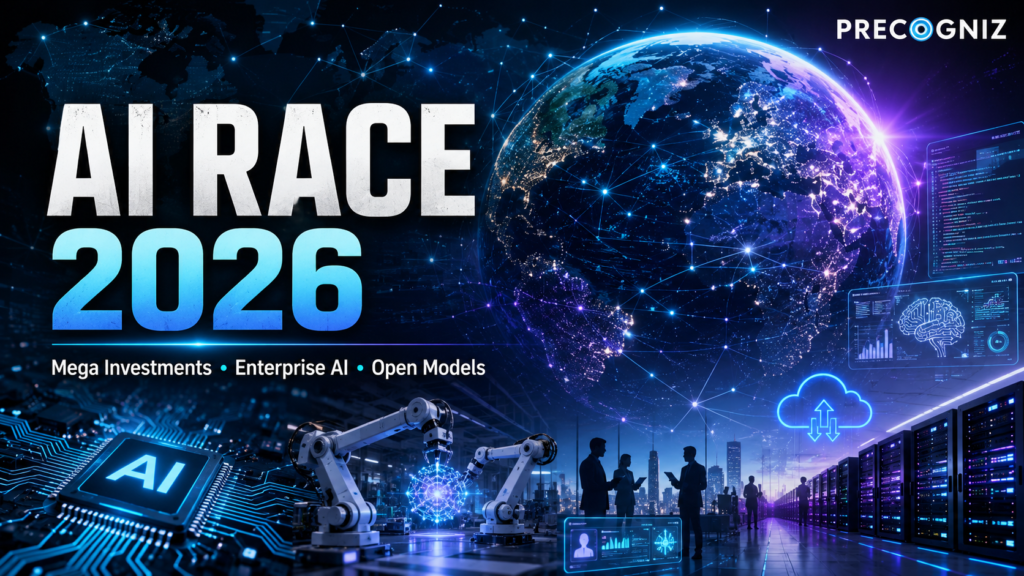
The Global AI Race Accelerates as Open Models, Mega Investments, and Enterprise Innovation Reshape the Future

Artificial Intelligence continues to redefine industries at an unprecedented pace. The third week of July 2026 has brought significant developments that highlight how AI is rapidly moving beyond conversational chatbots into enterprise infrastructure, autonomous agents, scientific research, software engineering, and global competition.

Several major announcements this week demonstrate that the AI race is no longer about launching another chatbot. Instead, the focus has shifted toward building massive computing infrastructure, releasing powerful open-weight foundation models, preparing billion-dollar public offerings, and creating enterprise-grade AI systems capable of transforming entire industries.

For businesses, developers, policymakers, and technology leaders, these developments provide valuable insight into where AI is heading over the next decade. This article examines the most important AI stories of the week, their broader implications, and why they matter for organizations worldwide.

The AI Industry Enters a New Phase

During the first wave of generative AI, the primary focus was on creating chatbots capable of answering questions and generating content. Today, the industry has entered a much more sophisticated phase.

Modern AI systems are increasingly expected to:

  • Perform complex reasoning
  • Execute multi-step workflows
  • Operate autonomously
  • Integrate with enterprise software
  • Assist scientific research
  • Improve business decision-making
  • Automate software development

This shift is changing how companies allocate resources. Instead of investing only in AI applications, organizations are now investing heavily in the underlying infrastructure required to train and deploy increasingly capable models.

Thinking Machines Lab Releases Inkling

One of the week’s most significant announcements comes from Thinking Machines Lab, which introduced Inkling, a 975-billion-parameter open-weights AI model released under the Apache 2.0 license. This represents one of the largest openly available AI models announced in recent months and reflects the growing momentum behind open AI ecosystems.

Unlike closed proprietary models, open-weight models enable developers, researchers, startups, and enterprises to inspect, fine-tune, and deploy AI systems with greater flexibility. This approach lowers barriers to innovation and encourages broader experimentation across industries.

The release of Inkling reinforces an important industry trend: organizations increasingly value transparency, customization, and deployment flexibility alongside raw model performance.

Enterprise AI Becomes the New Battleground

The competitive landscape has evolved significantly.

Rather than competing solely on benchmark scores, AI companies are now differentiating themselves through enterprise capabilities such as:

  • Large context windows
  • Agentic workflows
  • Lower inference costs
  • Improved reasoning
  • Enhanced security
  • On-premises deployment
  • Regulatory compliance

Enterprise customers require AI solutions that integrate seamlessly with existing business processes while meeting strict governance and security standards. As a result, vendors are investing heavily in infrastructure, orchestration tools, and enterprise-grade deployment options.

This marks a major shift from consumer-focused AI toward comprehensive business transformation platforms.

OpenAI, Anthropic, and the Race Toward Public Markets

Another notable development involves the financial evolution of leading AI companies.

Reports indicate that Anthropic is accelerating preparations for a potential public offering, while OpenAI is also considering its long-term IPO strategy. These developments reflect the enormous capital requirements associated with frontier AI research and deployment.

Training next-generation foundation models requires billions of dollars in computing infrastructure, specialized AI chips, engineering talent, and global data center capacity.

Going public could provide AI companies with access to additional capital while increasing transparency and accountability for investors.

The potential IPOs also demonstrate growing confidence that AI has transitioned from an emerging technology into a foundational industry expected to influence every sector of the global economy.

The Rise of Open AI Ecosystems

One of the defining themes of 2026 is the rapid growth of open AI ecosystems.

Organizations increasingly recognize several advantages of open-weight models:

  • Greater transparency
  • Reduced vendor lock-in
  • Lower operational costs
  • Better customization
  • Faster research collaboration
  • Enhanced security auditing

This trend benefits startups, universities, governments, and enterprises seeking greater control over AI deployments.

Rather than depending entirely on proprietary APIs, many organizations are building internal AI platforms using customizable open models tailored to specific business requirements.

AI Infrastructure Is Becoming Strategic

Behind every advanced AI model lies an enormous amount of computing infrastructure.

Training trillion-parameter models requires:

  • Massive GPU clusters
  • High-speed networking
  • Efficient cooling systems
  • Specialized storage
  • Advanced orchestration software
  • Energy optimization

Technology companies are therefore investing unprecedented amounts into AI infrastructure.

Industry analysts estimate that global spending on AI infrastructure will continue growing rapidly over the next several years as organizations compete to build increasingly capable foundation models.

This infrastructure race may ultimately prove more important than the models themselves, as computational capacity becomes one of the primary competitive advantages in AI development.

AI Agents Are Redefining Productivity

Another important trend is the emergence of AI agents.

Unlike traditional chatbots, AI agents can:

  • Plan tasks
  • Execute workflows
  • Interact with software
  • Use external tools
  • Analyze documents
  • Generate reports
  • Perform iterative reasoning

This represents a major leap from simple conversational AI toward autonomous digital assistants capable of completing meaningful business work with minimal supervision.

As AI agents mature, organizations are expected to redesign many operational workflows around human-AI collaboration rather than simple automation.

DeepSeek’s Growing Global Influence

Chinese AI startup DeepSeek continues to strengthen its position in the global AI landscape. Over the past week, reports indicated that the company is preparing for a major public offering while simultaneously raising additional private capital to support its next generation of AI models and cloud infrastructure. The company is reportedly targeting a significantly higher valuation while expanding enterprise adoption of its AI platform.

Unlike many competitors, DeepSeek has focused on delivering high-performance AI models at competitive pricing. This strategy has attracted developers, startups, and enterprises looking for cost-effective alternatives to premium AI services.

The company’s rapid growth also reflects the increasing maturity of China’s AI ecosystem. While U.S. companies continue to dominate frontier AI research, Chinese firms are demonstrating that innovation is becoming increasingly global rather than concentrated in a single region.

For businesses, this means greater competition, faster innovation, and more choices when selecting AI technologies.


Infrastructure Has Become the Real AI Battleground

A major trend shaping 2026 is the realization that success in AI depends not only on developing powerful models but also on building the infrastructure capable of training and operating them.

Leading technology companies are investing hundreds of billions of dollars in:

  • AI data centers
  • Specialized GPU clusters
  • High-speed networking
  • Advanced cooling systems
  • Energy-efficient computing
  • Dedicated AI chips

This infrastructure race has become one of the defining characteristics of the AI industry. Companies that can scale computing resources efficiently are better positioned to train larger models, reduce inference costs, and deliver faster AI services to customers.

As AI adoption expands across industries, infrastructure will likely remain one of the strongest competitive advantages for technology leaders.


AI Regulation Moves from Discussion to Implementation

Artificial intelligence is no longer viewed solely as a technological innovation—it has become a matter of economic competitiveness, national security, and public policy.

Governments around the world are introducing regulations that address:

  • AI transparency
  • Model accountability
  • Data privacy
  • Copyright protection
  • Cybersecurity
  • Safety testing
  • Responsible deployment

Technology companies are responding by investing more heavily in AI governance frameworks and compliance tools.

For enterprises, regulatory readiness is becoming just as important as model performance. Organizations adopting AI should establish governance policies covering data quality, security, human oversight, and risk management.

Businesses that prepare early will be better positioned to adapt as regulations continue to evolve.


Enterprise AI Adoption Continues to Accelerate

The conversation around AI has shifted from experimentation to measurable business value.

Organizations across sectors—including banking, healthcare, manufacturing, telecommunications, retail, logistics, and government—are integrating AI into daily operations.

Common enterprise use cases include:

  • Customer support automation
  • Intelligent document processing
  • Financial forecasting
  • Fraud detection
  • Predictive maintenance
  • Software development assistance
  • Risk management
  • Knowledge management
  • Marketing content generation

Rather than replacing employees, successful implementations increasingly focus on augmenting human capabilities by automating repetitive tasks and enabling faster decision-making.


AI and the Future Workforce

One of the most frequently discussed topics remains AI’s impact on employment.

While certain repetitive tasks are becoming increasingly automated, new opportunities are emerging in areas such as:

  • AI engineering
  • Prompt engineering
  • AI governance
  • Data quality management
  • AI security
  • Model evaluation
  • Human-AI collaboration
  • AI operations (AIOps)

Professionals who combine domain expertise with AI literacy are likely to be among the most sought-after talent over the next decade.

Organizations should therefore prioritize continuous learning and workforce upskilling to ensure employees can work effectively alongside intelligent systems.


Why Businesses Must Develop an AI Strategy Now

Artificial intelligence is no longer optional for organizations seeking long-term competitiveness.

Business leaders should focus on five strategic priorities:

1. Define High-Impact Use Cases

Identify processes where AI can improve productivity, reduce costs, or enhance customer experience.

2. Invest in Data Readiness

Reliable, well-governed data remains the foundation of successful AI implementations.

3. Build Responsible AI Governance

Establish policies covering ethics, security, privacy, transparency, and regulatory compliance.

4. Upskill Employees

Provide ongoing AI training to help teams adopt new technologies confidently.

5. Start Small and Scale Gradually

Pilot projects allow organizations to validate business value before expanding AI initiatives across the enterprise.


Key AI Trends to Watch Through 2027

Looking ahead, several trends are expected to shape the next phase of AI innovation:

Agentic AI

Autonomous AI systems capable of planning, reasoning, and executing complex workflows will become increasingly common.

Multimodal Intelligence

Future models will seamlessly process text, images, audio, video, and structured data within unified workflows.

Smaller Specialized Models

Compact domain-specific models will offer faster, more cost-effective deployment for enterprise applications.

AI at the Edge

Running AI directly on devices will improve privacy, reduce latency, and enable real-time decision-making.

AI Governance Platforms

Demand for governance, auditing, monitoring, and compliance solutions will continue growing alongside enterprise AI adoption.


Expert Perspective

The AI industry is entering a period of sustained transformation.

Recent developments demonstrate that competition is no longer centered solely on releasing the next chatbot. Instead, success increasingly depends on infrastructure investment, enterprise adoption, governance, and the ability to translate AI research into practical business outcomes.

Organizations that embrace AI strategically—while maintaining strong governance and investing in workforce development—will be best positioned to capitalize on the opportunities ahead.

Although challenges remain, including regulation, security, and ethical considerations, the pace of innovation shows no signs of slowing. Artificial intelligence is rapidly becoming foundational infrastructure for the digital economy.


Frequently Asked Questions

What was the biggest AI news this week?

Among the week’s notable developments were DeepSeek’s reported IPO preparations, continued infrastructure investments across the AI industry, and growing enterprise adoption of large language models.

Why is AI infrastructure so important?

Advanced AI models require enormous computing resources for both training and deployment. Companies with strong infrastructure can deliver faster, more scalable, and cost-effective AI services.

Will AI replace human jobs?

AI is expected to automate certain repetitive tasks while creating new opportunities in AI engineering, governance, security, and human-AI collaboration.

Why should businesses invest in AI now?

Early adopters can improve productivity, reduce operational costs, enhance customer experiences, and gain competitive advantages before AI becomes a standard capability across industries.


Conclusion

The developments of July 2026 reinforce a clear message: artificial intelligence is transitioning from a disruptive technology into a foundational layer of modern business and society. Competition among AI leaders is driving rapid innovation in infrastructure, enterprise applications, governance, and open ecosystems. For organizations, the challenge is no longer whether to adopt AI, but how to do so responsibly and strategically.

Businesses that invest today in AI capabilities, workforce skills, and governance frameworks will be better prepared to navigate an increasingly AI-driven future. As new models, infrastructure, and regulations continue to emerge, staying informed and adaptable will be essential for maintaining a competitive edge.

Agentic AI: Why 2026 Is the Year AI Stopped Just Chatting and Started Working


For the past few years, most people’s experience of artificial intelligence has been conversational: type a question into a chatbot, get an answer back, repeat. That model, useful as it is, has a hard ceiling. A chatbot can draft an email, but it can’t send it, track the reply, and follow up next week without a person doing the manual steps in between. Through 2026, that ceiling has started to break. The defining shift in AI this year isn’t a bigger model or a flashier demo, it’s the move from AI that talks to AI that acts. This category, generally called agentic AI, is reshaping how software gets built, how businesses operate, and how people think about delegating work to a machine.

This article breaks down what agentic AI actually is, why it has become the center of gravity in the industry this year, where it’s already being used successfully, and what to watch out for before handing real responsibility to an autonomous system.

What “Agentic” Actually Means

An AI agent, in the modern sense, is a system built on top of a language model that can plan a sequence of steps, use tools to carry them out, check its own results, and continue working with limited human intervention until a task is finished. The distinction from a standard chatbot is straightforward: a chatbot responds to one prompt at a time and waits for a person to decide what happens next. An agent is given a goal and a set of permissions, and it figures out the intermediate steps itself, calling on calendars, databases, code repositories, spreadsheets, or other software along the way.

A simple example makes the difference concrete. Ask a chatbot to “summarize this week’s customer complaints,” and it will summarize whatever text you paste in. Ask an agent to “review this week’s support tickets, categorize them by issue type, flag anything urgent, and draft replies for the routine ones,” and a well-built agent will retrieve the tickets itself, apply a categorization scheme, identify priority items, generate draft responses, and present the finished output, only pausing for a human to review anything sensitive or send the final replies.

This shift didn’t happen because language models suddenly got dramatically smarter overnight. It happened because of steady improvements in a few supporting areas: models that can reliably call external tools and interpret the results, longer context windows that let a system track a multi-step task without losing track of earlier steps, and better techniques for having a model check its own work before moving forward. Put together, these pieces turned language models from answer generators into something closer to digital coworkers.

Why This Trend Took Over 2026

Industry commentary throughout the year has converged on a consistent theme: the novelty phase of generative AI is over, and the practical phase has begun. Early generative AI tools impressed people by writing an email or generating an image on demand. That was enough to generate headlines in 2023 and 2024. By 2026, businesses want something more concrete: does the tool actually finish a job, reduce cost, or free up staff time, without creating new headaches in the process.

That expectation has pushed the market toward workflow-oriented AI rather than one-off prompting. Instead of a single person experimenting with a chatbot, organizations are connecting AI systems directly into sales pipelines, customer support queues, software development processes, and internal documentation systems. The agent doesn’t just generate text, it takes an action, checks the outcome, and moves to the next step in a defined process.

This has also changed who benefits most from AI. A solo freelancer or a five-person startup can now automate work that once required a much larger team, from triaging inbound leads to drafting first-pass legal documents to managing a content calendar. That capability gap between small and large teams, which used to favor whoever had more headcount, has narrowed considerably.

Where Agentic AI Is Already Delivering Results

Software Development

Coding is one of the clearest success stories for agentic AI. Rather than a developer copying suggestions from a chatbot one function at a time, coding agents can now read an entire codebase, understand the structure of a project, make coordinated changes across multiple files, run tests, and fix failures they discover along the way. This doesn’t remove the need for a human engineer to review the final result, but it compresses tasks that used to take hours into a much shorter review cycle.

Customer Support and Operations

Support teams are increasingly using agents to handle the full lifecycle of routine tickets: reading the incoming message, classifying the issue, checking account or order details, drafting a resolution, and escalating only the cases that need a human’s judgment. The result isn’t full automation of support, most serious deployments keep a person in the loop for anything unusual, but it does mean far fewer routine tickets require a human to start from scratch.

Research and Content Workflows

Marketing and research teams are using agents to handle multi-step tasks like competitive analysis, summarizing interview transcripts, tracking industry trends, or repurposing a single piece of content into multiple formats for different channels. Instead of a person manually gathering sources and organizing findings, an agent can pull information from multiple places, structure it, and hand over a draft ready for review.

Business Operations

Back-office tasks such as meeting note extraction, invoice processing, and internal documentation are increasingly handled by agents that connect directly to the tools a business already uses, rather than requiring staff to copy information back and forth between a chat window and other software.

The Governance Question Nobody Can Skip

Handing a system the ability to act, rather than just talk, raises the stakes considerably. If a chatbot gives a wrong answer, a person reads it and (hopefully) catches the mistake before acting on it. If an agent has permission to send emails, modify records, or push code changes, a mistake can propagate before anyone notices.

This is why the more sophisticated deployments of agentic AI in 2026 put as much emphasis on guardrails as on capability. Well-designed agent systems are built around a few consistent principles: clearly defined goals so the agent doesn’t wander into tasks it wasn’t authorized to do, explicit permissions that limit what data and systems it can touch, logging so every action can be reviewed after the fact, and mandatory human review for anything high-risk, such as financial transactions, legal commitments, or anything touching sensitive personal data.

Organizations that skip this step, treating agent permissions as an afterthought rather than a core design requirement, are the ones most likely to run into real problems: an agent that misclassifies a support ticket and sends an inappropriate response, or one that has broader access to internal files than the task actually required. The lesson many businesses have learned this year is that security and access control aren’t separate from the AI system, they’re part of what makes it usable at all.

Adaptive Reasoning: Matching Effort to the Task

A related development shaping agentic AI this year is what’s often called adaptive reasoning: systems that adjust how much computational effort they spend based on how difficult a task actually is. A simple request, like formatting a document or answering a factual question, gets handled quickly with minimal processing. A complex, high-stakes task, like reviewing a legal contract for risk or debugging a subtle software issue, triggers a slower, more deliberate reasoning process.

This matters practically because it directly affects cost and reliability. Running every single request through the most expensive, most thorough reasoning process available is wasteful and slow. Running everything through the fastest, cheapest process risks mistakes on tasks that actually need careful thought. Systems that can tell the difference and allocate effort accordingly are proving more useful and more economical for real business use than either extreme.

Vertical, Industry-Specific Tools Are Gaining Ground

Another pattern that has become clear this year is that general-purpose AI tools are increasingly losing ground to tools built for a specific industry or function. A generic writing assistant is useful, but a tool built specifically for healthcare documentation, financial compliance, or engineering workflows tends to make fewer domain-specific mistakes because it’s been designed around the particular rules, terminology, and risks of that field.

This shift toward specialization mirrors what happened with software more broadly over the past few decades: general tools get adopted first, then specialized tools take over once the market matures and the specific pain points in each industry become clear.

What This Means for Individuals and Businesses

For a person deciding how to work with these tools, the practical takeaway is to start with one clearly defined, repeatable task rather than trying to automate everything at once. Whether that’s triaging support tickets, drafting weekly reports, or handling a specific research task, picking a single workflow, documenting how it should work, and adding a well-scoped agent with clear review points tends to produce far better results than a broad, unstructured attempt to “use AI more.”

For businesses, the emerging best practice is treating governance, data access, and human review as core parts of the system rather than something to add later. An agent that can act needs the same kind of access control and audit trail that any other piece of business-critical software would require.

For everyone, the more general lesson is that the usefulness of these systems depends heavily on how thoughtfully they’re deployed. An agent given a clear, bounded task with proper oversight can genuinely save time and reduce errors. An agent given broad, vague authority without a review process is a liability waiting to surface.

Looking Ahead

The direction of travel seems unlikely to reverse. As tool integration improves and reasoning systems become more reliable, agents will likely take on progressively larger and more complex chains of work, while the emphasis on permissions, logging, and human oversight will only grow more important as they do. The technology is no longer a novelty; it’s infrastructure. The organizations and individuals who benefit most will be the ones who treat it that way, building it into their workflows deliberately, with clear boundaries, rather than chasing the next flashy demo.

Conclusion

The story of AI in 2026 isn’t about a single breakthrough model, it’s about a shift in what AI is asked to do. Moving from a system that answers questions to one that completes tasks changes the calculation for what these tools are worth, what risks they introduce, and how they should be managed. Agentic AI represents a genuine expansion of what’s practically possible, but that expansion comes with a responsibility to build these systems carefully, with real oversight, rather than assuming capability alone is enough.

What Is Predictive Analytics? A Complete Guide for Beginners

Predictive Analytics: How Businesses Are Learning to See Around Corners

Introduction: The Power of Anticipation

In today’s data-rich business landscape, the ability to anticipate what’s coming next isn’t just a competitive advantage—it’s a survival necessity. Every day, organizations generate staggering volumes of data through transactions, customer interactions, sensors, and digital touchpoints. The businesses that thrive aren’t necessarily the ones collecting the most data, but the ones that know how to turn that data into foresight.

Predictive analytics represents the evolution from understanding what happened (descriptive analytics) and why it happened (diagnostic analytics) to forecasting what will happen and, ideally, what we should do about it (prescriptive analytics). It’s the difference between a business that reacts to problems after they occur and one that sees them coming weeks or months in advance.

At its core, predictive analytics uses historical data combined with statistical modeling, data mining techniques, and machine learning to analyze current and past data and build accurate forecasts. This empowers organizations to estimate the probability of future or otherwise unknown events and make proactive, evidence-based decisions rather than relying on gut instinct or guesswork.

This guide walks through what predictive analytics actually is, how it works in practice, the tools and techniques driving it, and how any organization—regardless of size or technical maturity—can begin using it effectively.

What Predictive Analytics Is (and Isn’t)

Predictive analytics is not about gazing into a crystal ball, and it’s not magic. It’s a rigorous, data-backed process that identifies patterns in historical data to calculate the likelihood of future outcomes. It draws on statistics, probability theory, and computing power to answer very concrete business questions, such as:

  • Which customers are likely to churn next month?
  • What will our sales look like next quarter?
  • Which machine on the factory floor is most likely to fail first?
  • Will this loan applicant default on their payments?
  • Which patients are at elevated risk of hospital readmission?

It’s important to understand what predictive analytics does not promise. It is not a guarantee of the future, but rather a probabilistic assessment grounded in evidence. A model might say a customer has an 80% likelihood of canceling their subscription—that doesn’t mean it will definitely happen, only that the odds, based on historical patterns, lean strongly in that direction.

The accuracy of any prediction depends heavily on two things: the quality of the underlying data and the appropriateness of the model chosen to analyze it. Feed a model incomplete, outdated, or biased data, and even the most sophisticated algorithm will produce unreliable forecasts. This is why data quality is treated as a foundational, non-negotiable requirement rather than an afterthought.

How Predictive Analytics Works: The Core Process

While the specific techniques vary by industry and use case, most predictive analytics initiatives follow a consistent six-stage process:

1. Define the Business Objective Everything starts with a clear, specific question. Vague goals like “let’s use AI” rarely produce useful results. Instead, teams need to articulate precisely what they’re trying to predict and why it matters to the business.

2. Collect and Prepare Data This stage involves gathering relevant historical data from internal systems (CRM, ERP, transaction logs) and sometimes external sources, then cleaning, structuring, and transforming it into a format suitable for modeling. Data preparation is often the most time-consuming part of the entire process, frequently consuming 60-80% of a project’s total effort.

3. Select and Train a Predictive Model Based on the nature of the problem—classification, regression, clustering, or forecasting—data scientists select an appropriate algorithm and train it on historical data, allowing the model to learn the underlying patterns.

4. Validate and Test Model Performance Before deployment, models are tested against data they haven’t seen before to evaluate accuracy, precision, and reliability. This step catches overfitting, where a model performs well on training data but poorly on new, real-world data.

5. Deploy the Model and Generate Predictions Once validated, the model is integrated into business workflows and systems, where it begins generating live predictions that inform decision-making.

6. Monitor and Refine the Model Over Time Predictive models are not “set and forget” tools. As market conditions, customer behavior, and underlying data patterns shift, models need ongoing monitoring, recalibration, and retraining to maintain their accuracy.

Key Techniques and Algorithms

Predictive analytics draws on a toolbox of statistical and machine learning techniques, each suited to different types of problems.

Regression Analysis identifies relationships between variables and is used to predict continuous numerical outcomes. It’s commonly applied to forecasting sales revenue or predicting housing prices based on features like location, size, and market conditions.

Decision Trees create visual, branching models of decisions and their possible consequences. They’re particularly useful for classification tasks such as customer segmentation and credit scoring, where the goal is to sort entities into distinct categories.

Neural Networks excel at recognizing complex, non-linear patterns buried in large datasets. They power applications like image recognition and sophisticated fraud detection systems that need to catch subtle, evolving patterns of suspicious activity.

Clustering Models group similar data points together based on shared characteristics, without requiring predefined categories. This technique underlies market segmentation efforts and anomaly detection, where the goal is to spot data points that don’t fit established patterns.

Time Series Analysis examines data points collected sequentially over time to forecast future values. It’s the backbone of stock price prediction, demand forecasting, and website traffic projections.

Random Forests combine the output of multiple decision trees to produce more accurate and robust predictions than any single tree could achieve alone. This ensemble approach is widely used for customer churn prediction and risk assessment, where reliability matters more than simplicity.

Real-World Applications Across Industries

Predictive analytics is reshaping decision-making across nearly every sector of the economy.

Retail and E-commerce Retailers use predictive models to forecast demand, optimize pricing strategies, personalize product recommendations, and estimate customer lifetime value. Streaming platforms like Netflix analyze viewing patterns to fine-tune recommendation engines, a strategy that has become central to keeping users engaged and subscribed.

Financial Services Banks and financial institutions rely on predictive analytics for credit scoring, fraud detection, algorithmic trading, and enterprise risk management. Lenders use these models to assess the likelihood that a loan applicant will default, allowing for more informed underwriting decisions.

Manufacturing Predictive maintenance allows manufacturers to anticipate equipment failures before they cause costly, unplanned downtime. By analyzing sensor data from machinery, companies can schedule maintenance proactively, optimize supply chains, and improve overall product quality control.

Healthcare Hospitals and health systems use predictive analytics to identify patients at high risk of readmission, flag individuals likely to develop certain chronic conditions, and optimize the allocation of limited resources like beds, staff, and equipment.

Marketing Marketing teams apply predictive scoring to prioritize leads most likely to convert, optimize campaign targeting and spend, and identify customers showing early warning signs of churn—enabling proactive retention outreach before it’s too late.

The Predictive Analytics Toolkit: Software and Platforms

Modern predictive analytics tools have made these powerful techniques accessible to organizations of virtually every size, not just those with large, specialized data science teams. The market spans everything from open-source programming libraries to comprehensive enterprise platforms.

Tool Best For Key Strength
Microsoft Power BI Organizations embedded in the Microsoft ecosystem (Azure, Excel, Dynamics) Tight integration and low-cost entry with powerful built-in features
Tableau Visual exploration, data storytelling, and interactive dashboards Industry-leading visualization and an intuitive interface
Qlik Sense Deep, exploratory analysis for uncovering hidden data relationships Powerful associative analytics engine with in-memory processing
Amazon QuickSight Cloud-native analytics for AWS-centric organizations High scalability and pay-per-session pricing
Alteryx Data preparation and blending ahead of predictive modeling Drag-and-drop workflow for data prep and analytics
SAS Viya Highly regulated industries needing enterprise-scale analytics Strong governance and proven statistical depth
Python/R with Libraries Custom model development and maximum flexibility Open-source with a vast ecosystem of specialized packages

Pro tip for beginners: You don’t need a team of PhDs to get started. Many modern platforms now offer AutoML (Automated Machine Learning) capabilities, which automate the process of training and tuning models—making predictive analytics genuinely accessible to business analysts and domain experts without deep technical backgrounds.

Getting Started: A Practical Roadmap

For organizations new to predictive analytics, jumping straight into complex modeling can be overwhelming and counterproductive. A more measured approach tends to produce better, faster results.

1. Start with a clear business problem. Don’t pursue analytics for its own sake. Identify a specific, measurable question you actually need answered—for example, “Which 10% of our customers are most likely to cancel their subscription in the next 60 days?”

2. Audit your data. Assess the availability, quality, and relevance of your historical data before committing to a project. The old adage “garbage in, garbage out” is especially true here—no algorithm can compensate for fundamentally flawed input data.

3. Choose the right tool. Select a platform that matches your team’s technical skills, available budget, and existing technology stack. Most vendors offer free trials, making it easy to test drive a few options before committing.

4. Begin with a pilot project. Choose a well-defined, low-risk problem to demonstrate value quickly and build organizational buy-in before scaling to larger, higher-stakes initiatives.

5. Focus on data literacy. Invest in training your team to understand and interpret model outputs. Even the most sophisticated predictive model is worthless if decision-makers don’t trust or understand what it’s telling them.

Challenges and Considerations

Despite its promise, predictive analytics comes with real challenges that organizations need to plan for.

Data Quality Inaccurate, incomplete, or inconsistent data remains the single biggest threat to model accuracy. Investing in data governance, cleaning processes, and ongoing quality checks isn’t optional—it’s foundational to any successful initiative.

Model Interpretability vs. Accuracy Some of the most accurate models, particularly deep neural networks, function as “black boxes,” making it difficult to explain exactly why a given prediction was made. This tension between accuracy and explainability can create real hurdles for regulatory compliance and for building stakeholder trust in a model’s output.

Ethical and Bias Concerns Predictive models can inadvertently perpetuate and even amplify biases already present in historical data. If past lending decisions reflected discriminatory patterns, for instance, a model trained on that data risks encoding those same biases into future decisions. Ongoing monitoring and bias mitigation are essential to ensuring fair, equitable outcomes.

Ongoing Maintenance Predictive models degrade over time as underlying data patterns shift—a phenomenon often called “model drift.” What worked well a year ago may perform poorly today if customer behavior, market conditions, or external factors have changed. Models require continuous monitoring, evaluation, and periodic retraining to stay useful.

The Future of Predictive Analytics

The field continues to evolve rapidly, with several trends shaping where it’s headed next.

Augmented Analytics uses AI and natural language processing to automate data preparation and insight generation, making analytics tools even more accessible to non-technical users across an organization.

Edge Analytics involves running predictive models directly on devices—IoT sensors, smartphones, industrial equipment—enabling real-time insights without the latency of sending data back and forth to the cloud.

Integration with Generative AI is perhaps the most exciting frontier. Large language models are increasingly being used to explain predictive model outputs in plain, accessible language, generate synthetic data to train models when real data is scarce, and even assist with feature engineering—the process of selecting and constructing the input variables that make a model effective.

Conclusion

Predictive analytics is the cornerstone of modern, proactive business strategy. By shifting the organizational mindset from hindsight to foresight, companies can reduce risk, capitalize on emerging opportunities earlier than their competitors, and operate with a level of efficiency that reactive, backward-looking approaches simply can’t match.

The journey doesn’t require massive upfront investment or an army of data scientists. It begins with something much simpler: a clear question worth answering, a genuine commitment to data quality, and the organizational willingness to let evidence—rather than intuition alone—guide key decisions. For businesses willing to take that first step, predictive analytics offers a real, measurable path toward smarter, faster, and more confident decision-making.

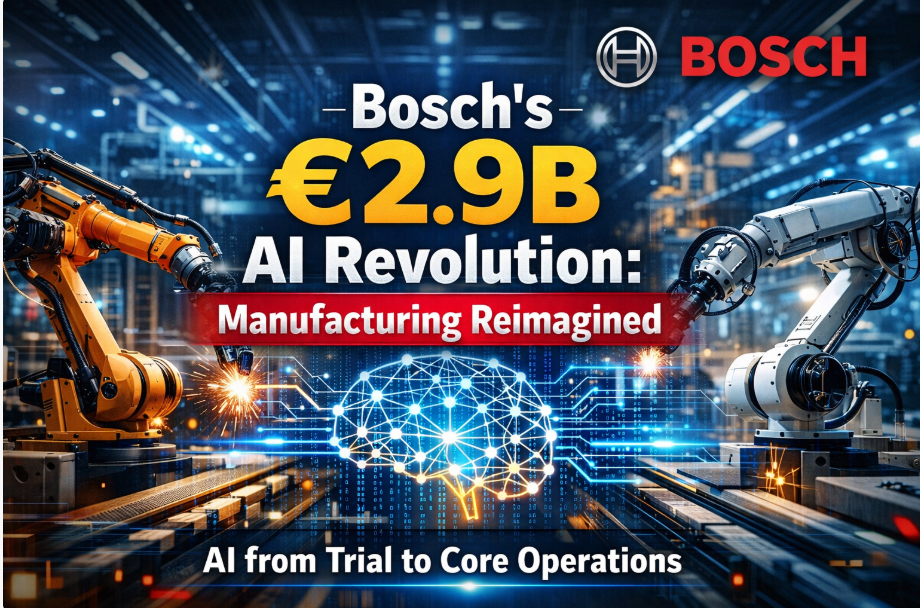
Bosch’s €2.9 Billion AI Bet: A Strategic Shift From Trial to Industrial Core

In a major strategic move, German engineering giant Bosch has announced plans to invest approximately €2.9 billion in artificial intelligence by the end of 2027, signaling a shift from experimental projects to embedding AI deeply into its manufacturing and operations infrastructure. This commitment underscores how the industrial sector increasingly views AI not as an optional technology but as essential to competitiveness in the face of rising complexity, cost pressures, and volatile markets.

From Data Deluge to Real-World Action
Modern factories generate vast amounts of data from cameras, sensors, and process logs, yet a significant portion goes unused. Bosch’s strategy aims to turn this unused data into actionable insights. By leveraging AI models on manufacturing lines, Bosch can identify quality deviations and potential faults in real time rather than after production — reducing waste, lowering defect rates, and streamlining rework. Highly detailed sensor analysis also supports predictive maintenance, allowing teams to schedule repairs before breakdowns occur and thus minimize costly downtime.

Reimagining Supply Chains With Intelligence
Global supply chains continue to grapple with shifting demand patterns and disruptions. Bosch plans to use AI to refine forecasting, optimize inventory flows, and dynamically adapt to changes in logistics and supplier networks. Even modest improvements in forecasting accuracy can cascade into significant cost and efficiency gains across Bosch’s hundreds of facilities worldwide.

Edge AI and Perception Systems: Speed and Security at the Source
A core pillar of Bosch’s AI architecture is edge computing — running AI locally on devices and machines instead of relying solely on remote cloud processing. This ensures ultra-fast responses vital for production automation and protects sensitive operational data. Bosch is also prioritizing perception systems that combine sensors like camera feeds and radar with real-time AI inference. These systems are crucial not only for factory automation but also for applications ranging from advanced driver assistance to robotic perception.

Beyond Pilot Projects
Large-scale deployment of AI solutions across Bosch’s global footprint requires substantial investment, skilled personnel, and an organizational shift towards AI as core infrastructure. Bosch leadership frames AI as a tool to augment human workers, not replace them, freeing teams from repetitive or high-complexity tasks and empowering them with better decision support.

Strategic Implications for the Industrial Sector
Bosch’s investment comes amid broader industrial trends where manufacturers — from automotive suppliers to electronics producers — place greater emphasis on AI-driven efficiency, resilience, and smart automation. The commitment highlights a paradigm where AI is not a standalone innovation but a foundational layer of future operations: adaptable, data-driven, and capable of scaling across diverse environments.

What This Means Going Forward
For Bosch, the €2.9 billion AI push is about sustaining long-term competitiveness: reducing waste, boosting productivity, and enhancing agility throughout complex manufacturing ecosystems. As AI transitions from niche experiments to fundamental operational infrastructure, Bosch’s example illustrates a broader industrial shift where intelligence and physical systems converge — shaping the future of manufacturing and supply chain excellence.

AI in Insurance Isn’t One-Size-Fits-All — and the Biggest Players Know It

  • The AI narrative is oversimplified

    • AI in insurance is often framed as a linear journey: automate → cut costs → improve underwriting → enhance customer experience.

    • In reality, large insurers are adopting AI in very different ways, driven by operational realities—not lack of ambition.

  • The real question isn’t if AI is used, but where

    • Some insurers prioritise customer-facing use cases:

      • Claims triage and automation

      • Chatbots and digital servicing

      • Fraud detection with faster ROI

    • Others focus on internal transformation:

      • Modernising legacy policy administration

      • Enhancing risk modelling and actuarial analysis

      • Improving back-office efficiency

  • Operational readiness separates leaders from followers

    • Insurers with:

      • Clean data architectures

      • Modular, flexible systems

      • Strong data governance
        can experiment faster and scale AI confidently.

    • Those burdened by legacy tech debt adopt AI selectively, often in silos rather than end-to-end.

  • Risk appetite shapes AI strategy

    • Large insurers face intense regulatory and reputational scrutiny.

    • This drives a cautious approach:

      • Preference for explainable AI

      • Human-in-the-loop decision-making

      • Strong governance and control frameworks

    • Speed matters—but trust and accountability matter more.

  • AI maturity is being redefined

    • Success is no longer measured by flashy pilots or proofs of concept.

    • True maturity shows up when:

      • AI is embedded into everyday decisions

      • Workflows, roles, and controls are redesigned around AI

      • Humans and machines collaborate seamlessly

  • The strategic takeaway

    • There is no universal AI blueprint for insurers.

    • Competitive advantage comes from:

      • Aligning AI use with operational constraints

      • Grounding decisions in data reality

      • Matching technology choices to risk philosophy

    • In insurance, intelligence isn’t just artificial—it’s strategic.


Best Data Security Platforms 2025

Best Data Security Platforms of 2025: Securing Trust in a Data-First World

In 2025, data security is no longer just an IT function—it’s a boardroom priority. With stricter privacy regulations, cloud-first architectures, AI-driven analytics, and remote collaboration becoming the norm, organisations need platforms that go beyond basic protection. The best data security tools today combine automation, intelligence, and scalability to reduce risk without slowing the business.

Here’s a concise, insight-driven look at the top data security platforms of 2025 and where each one shines.


1. Velotix

Velotix leads the way in AI-driven data access governance. It automates complex policies and ensures users see only what they’re authorised to—nothing more, nothing less. For enterprises struggling with GDPR, HIPAA, or CCPA compliance across massive data estates, Velotix dramatically simplifies governance while maintaining agility.

Best for: Large enterprises with complex, regulated data environments.


2. NordLayer

Built by the team behind NordVPN, NordLayer applies zero-trust network access to secure data in transit. With strong encryption and rapid deployment, it’s ideal for organisations adopting hybrid work and cloud-native models.

Best for: Secure remote access and encrypted data flows.


3. HashiCorp Vault

HashiCorp Vault is the gold standard for secrets management and encryption as a service. Its dynamic credentials and identity-based access control make it indispensable for DevOps and cloud-native teams handling sensitive operational data.

Best for: Developer-led organisations and modern application security.


4. Imperva – Database Risk & Compliance

Imperva brings deep expertise in database activity monitoring, vulnerability management, and audit readiness. With real-time analytics and insider-threat detection, it protects some of the world’s most sensitive enterprise databases.

Best for: Mission-critical databases and compliance-heavy industries.


5. ESET

ESET combines endpoint security, encryption, and AI-powered threat detection into a single, easy-to-manage platform. It’s particularly effective for preventing data loss from lost or compromised devices.

Best for: Endpoint-centric organisations seeking simplicity and strong protection.


6. SQL Secure

Designed for SQL Server environments, SQL Secure offers role-based access analysis, data masking, and compliance reporting. It helps DBAs quickly identify excessive privileges and close security gaps.

Best for: Organisations heavily reliant on Microsoft SQL Server.


7. Acra

Acra takes a developer-first approach to encryption, embedding cryptography directly into applications. With end-to-end protection and open-source transparency, it’s a favourite among startups and engineering-led teams.

Best for: Application-level and embedded data security.


8. BigID

BigID excels at discovering, classifying, and managing sensitive data across structured and unstructured sources. Its AI-powered insights help organisations understand data risk and embed privacy by design.

Best for: Data discovery, privacy, and regulatory compliance at scale.


9. DataSunrise

DataSunrise offers database firewalls, real-time monitoring, and audit reporting across SQL, NoSQL, and cloud databases. Its flexibility makes it well-suited for heterogeneous environments.

Best for: Organisations running multiple database technologies.


10. Covax Polymer

As collaboration tools become data hotspots, Covax Polymer secures platforms like Slack, Microsoft Teams, and Google Workspace. Its real-time, context-aware DLP ensures sensitive data isn’t shared unintentionally.

Best for: SaaS-heavy, collaboration-driven workplaces.


Final Takeaway

The best data security platform in 2025 isn’t a one-size-fits-all solution. Leaders are building layered security ecosystems—combining data discovery, access governance, encryption, database protection, and SaaS security. Whether you’re a startup scaling fast or a global enterprise managing regulatory pressure, these platforms represent the cutting edge of protecting what matters most: your data and your trust.

✈️ How AI Is Transforming the Way We Travel

Artificial Intelligence (AI) is redefining the global travel experience — from how trips are planned to how they’re lived. Once limited to booking engines and chatbots, AI now sits at the heart of every travel stage: personalisation, real-time decision-making, cost optimisation, and even sustainability. The result is smarter, faster, and more seamless journeys — but also new ethical and operational challenges.

🌍 1. Smarter Planning, Tailored Experiences

AI trip planners can now create entire itineraries in seconds. By analysing preferences such as budget, diet, weather, or travel style, they deliver highly personalised travel plans that once took hours of manual research. Tools like generative AI assistants or integrated booking chatbots can even adjust mid-trip when a flight is delayed or a restaurant closes. However, trust remains an issue — travellers still question the accuracy and bias of machine-generated advice.

💸 2. Dynamic Pricing and Operational Efficiency

Airlines and hotels are increasingly relying on AI to predict demand, adjust prices, and manage resources. Dynamic pricing algorithms track factors like seasonality, competitor rates, and flight occupancy to deliver optimal pricing in real time. Meanwhile, automated customer service bots handle queries, re-bookings, and refunds instantly. For companies, AI means reduced costs and greater efficiency; for consumers, better value and convenience. Yet concerns around opaque pricing and data privacy persist.

🧭 3. Real-Time Assistance on the Move

AI is revolutionising travel in real time. From facial-recognition check-ins at airports to predictive flight delay alerts, technology is reducing friction at every step. Language barriers are disappearing thanks to AI-powered translation tools, while adaptive itineraries automatically adjust to travel disruptions. The result is more accessible, stress-free travel — particularly for elderly travellers or those exploring unfamiliar regions.

🌱 4. Driving Sustainable Tourism

Beyond convenience, AI is helping the industry meet sustainability goals. Airlines use AI to optimise routes and reduce fuel use, while hotels deploy smart systems to track food waste and energy consumption. Destination managers leverage predictive analytics to prevent overcrowding and promote lesser-known attractions. This data-driven approach helps cut emissions and improve the traveller experience — though transparency is needed to prevent “greenwashing.”

🇮🇳 5. The Indian Travel Revolution

For Indian travellers, AI brings massive potential. Localised trip planners can design region-specific itineraries, accounting for cultural preferences, language, and transport options. Real-time translation opens up remote destinations, while AI-based crowd and traffic management can transform domestic tourism during peak festivals and holidays. However, India’s digital infrastructure gaps and evolving data-protection laws remain key challenges.

🔮 6. The Future: Agentic and Ethical AI

The next frontier is “agentic AI” — autonomous digital assistants capable of booking, rescheduling, and managing full trips end-to-end. As these systems evolve, the industry must ensure explainable, transparent, and privacy-compliant models. The balance between automation and the human touch will define the future of travel.

✨ Final Thought

AI isn’t just enhancing travel — it’s rewriting it. The technology promises unprecedented convenience, sustainability, and personalisation. But success will depend on keeping human warmth, trust, and ethical responsibility at the centre of this digital transformation.

Hyundai’s AI Initiative to Overhaul Transportation

Hyundai Motor Group is spearheading a significant transformation in the transportation industry by leveraging a wide range of AI-powered technologies. Rather than focusing solely on autonomous vehicles, the company is implementing a holistic approach that redefines mobility across manufacturing, vehicle design, and urban services.

This strategic shift, encapsulated in the “Progress for Humanity” vision, is highlighted by the establishment of the Next Urban Mobility Alliance (NUMA). This public-private partnership aims to create a future mobility ecosystem powered by AI and autonomous technologies.

Here are some key insights into Hyundai’s AI-driven initiatives:

  • Manufacturing and Production: Hyundai is revolutionizing its factories by integrating AI and robotics. The new Hyundai Motor Group Metaplant America (HMGMA) in Georgia is a prime example, using at least 23 AI or robotic systems per vehicle. This includes AI-driven robots for quality inspection and digital twins—virtual models of the production process—to optimize efficiency, reduce waste, and identify issues in real-time.

  • Advanced Driver Assistance and Autonomous Driving: The company is advancing autonomous driving through partnerships with companies like NVIDIA and Motional. Their IONIQ 5 Robotaxi, a Level 4 autonomous vehicle, is a key project, using an AI-driven perception system with multiple sensors to navigate complex urban environments. Hyundai’s focus is on enhancing safety and accessibility for all passengers.

  • Inclusive Urban Mobility Services: Hyundai is not just building cars; it’s creating services. The “Shucle” platform is an AI-based demand-responsive transportation (DRT) service that uses dynamic routing to optimize vehicle operations based on real-time needs. This system is designed to provide efficient and flexible transport, particularly for communities with limited access.

  • Connected and Smart Vehicles: Hyundai’s Bluelink platform is at the heart of its connected mobility strategy. The system uses AI to offer personalized insights and features, including voice commands in multiple languages. This focus on software-defined vehicles (SDVs) allows for over-the-air (OTA) updates, enabling vehicles to get new features and performance enhancements without a visit to a service center.

  • Robotics for a “Mobility of Things” Ecosystem: Beyond vehicles, Hyundai is developing service robots like DAL-e (a customer service robot) and ACR (an electric vehicle charging robot). The company’s vision of a “Mobility of Things” (MoT) ecosystem aims to grant mobility to all objects, freeing people from constraints of time and space.Based on the information available, Hyundai is overhauling transportation by implementing a comprehensive AI strategy across its entire business, from manufacturing to mobility services. This goes beyond just autonomous vehicles to include robotics, connected cars, and smart factory technologies.